When the salmon runs low
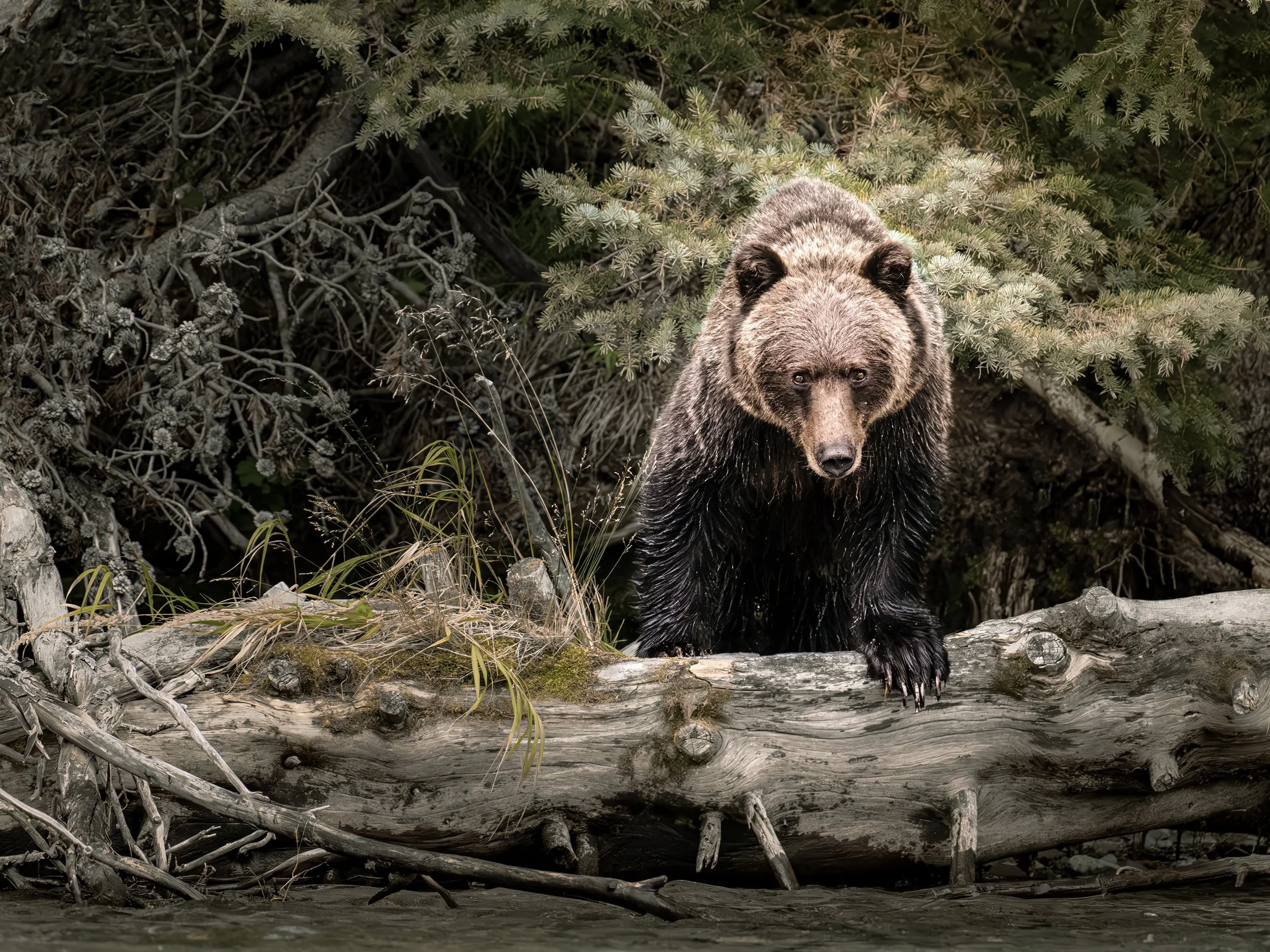
Last autumn, I watched a grizzly step into the river with the slow confidence of a predator that has done this for generations. The water was cold and silvered with the flick of salmon, but not nearly as many as there should have been. He moved from pool to pool, pausing longer each time, as if weighing whether the effort was worth it.
When the salmon run is weak, the effects ripple far beyond the bears. Grizzlies rely on the high-protein, high-fat feast to carry them through the long months of hibernation. But the salmon they don’t eat—or the scraps they leave behind—are just as important. They feed eagles, wolves, and countless scavengers. And what remains decays into the forest floor, carrying ocean nutrients deep into the roots of cedar and spruce.
Old-growth forests play a quiet but crucial role in keeping that cycle strong. Their shade keeps streams cool enough for salmon to spawn. Their roots hold the banks steady during floods. Fallen logs create resting pools for fish fighting their way upstream. Without them, streams run hotter, shallower, and less forgiving—and the salmon disappear.
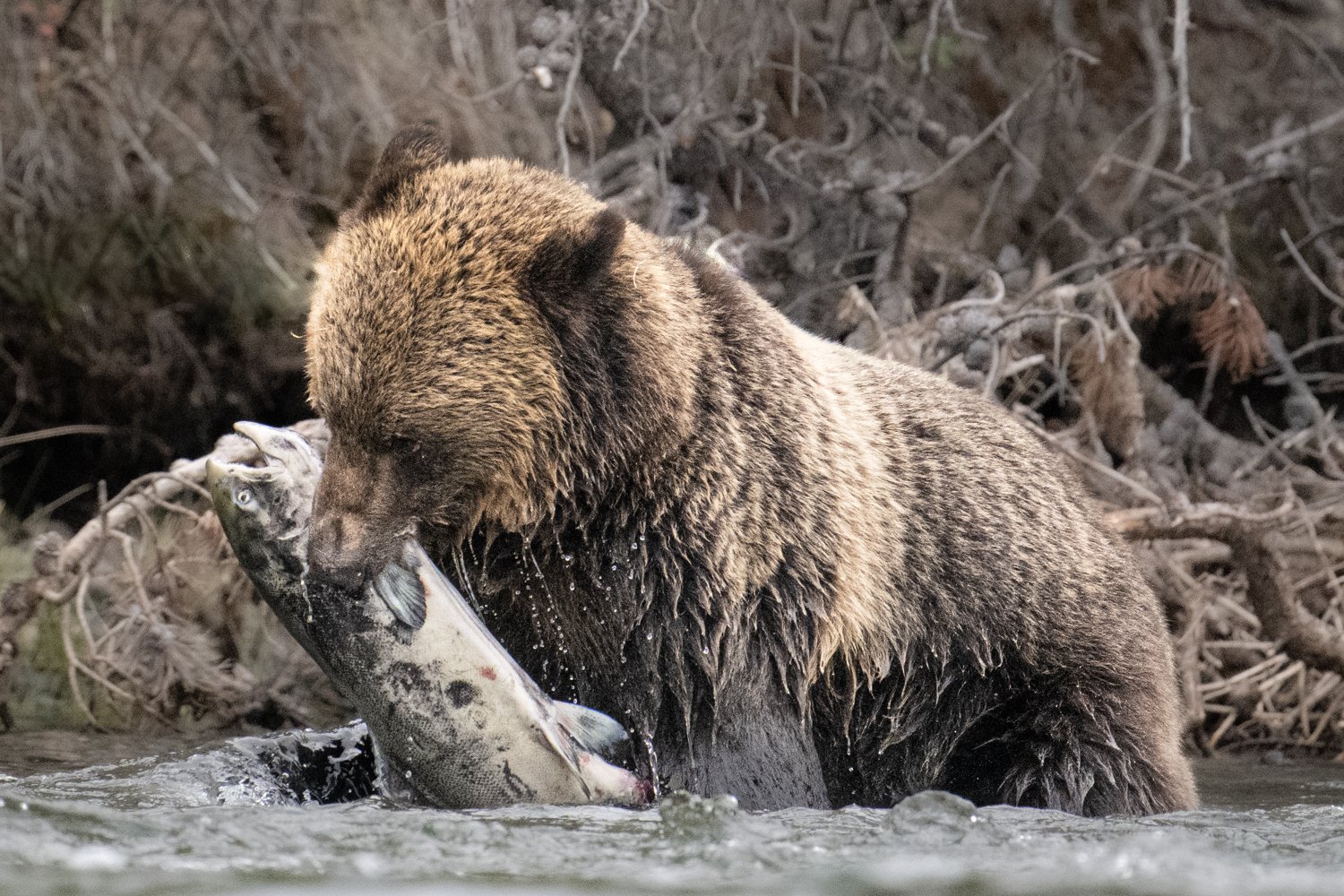
The grizzly I photographed that day eventually pulled a single fish from the water. He ate in the shallows, steam rising from his fur in the cold air, before disappearing into the trees. It was a beautiful moment, but a sobering one. Because the truth is, when the salmon runs low, the forest feels it. The bears feel it. And eventually, so do we.